
Houston Event Staffing
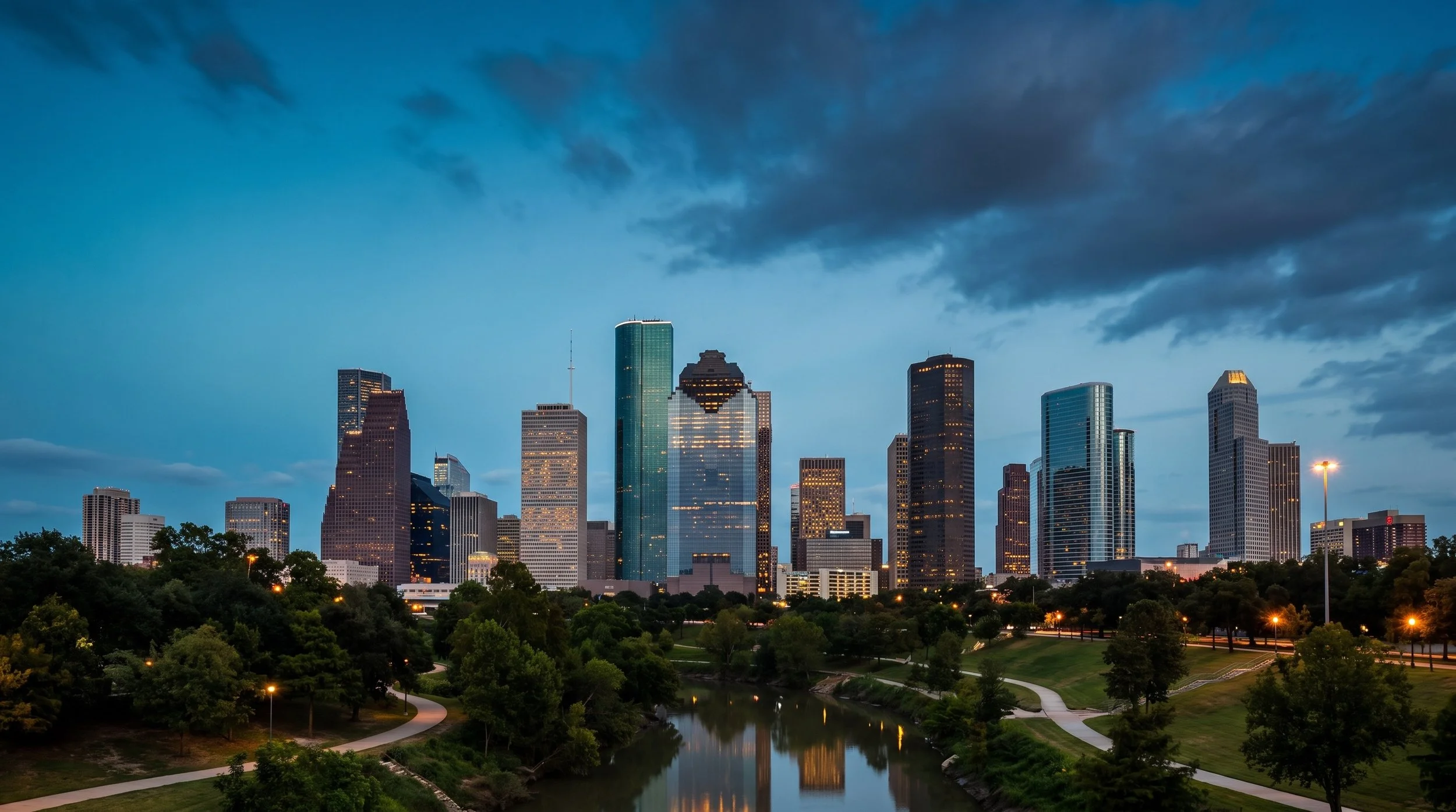
TempGuru · Houston, TX · Updated July 2026
Staffing the energy capital's convention halls, stadium dates, and a three-week rodeo, where the Gulf heat decides the call sheet.
Scroll. It gets specific.01The Ground Truth
In Houston, energy books the calendar and a three-week rodeo owns the spring.
The energy industry is headquartered here, the Texas Medical Center is the largest medical complex anywhere, and RodeoHouston fills Reliant Park for three weeks every spring. The demand is not the question. Heat and distance are. Houston spreads across three freeway loops, and a Gulf-Coast summer can put a load-in crew in ninety-five-degree humidity before the doors open.
Quick Answer
Bill rates in Houston start at $30.50 an hour and top out around $36.50 for most event roles. Team leads run $40.50 to $46.50, and specialized crew like bartenders, AV, and brand ambassadors run $47 to $67. Each figure is all-in and W-2: workers' comp, general liability, and payroll taxes sit inside the rate, not on top of it.
Every order runs through one coordinator. A standard booking confirms in 24 to 48 hours and usually goes on the calendar 2 to 4 weeks out. Urgent orders move in 2 to 3 days at a rush premium, and same-week backfills are available in select markets when a worker drops. RodeoHouston and the spring energy expos fill earlier, so those want a longer runway.
Teams that booked TempGuru, in their own words

The staff we had onsite were amazing. They were polite, professional, and always willing to help. They made a meaningful impact on the success of our event.

Both staff were well suited for our event needs and were keen to help in any way possible.

You delivered excellent service from the very first contact, and Emmanuel was also great during the installation: very attentive, knowledgeable about the subject, and my team praised him highly.

02The Map
One downtown core, Reliant Park to the south, and the energy business out west.
Houston spreads out, but the event work concentrates. Downtown anchors on the George R. Brown Convention Center, with the Toyota Center and Daikin Park a few blocks east, so a convention, a Rockets night, and an Astros homestand can all land on the same block of calendar. Reliant Park, south of downtown by the Texas Medical Center, runs Reliant Stadium and Reliant Center: Texans Sundays, the OTC energy expo, and the three weeks of RodeoHouston every spring. The Energy Corridor out along the Katy Freeway carries the corporate side, the meetings and galas for the industry that built the city.
The bigger constraint is the heat. From May into September, Gulf humidity turns an outdoor load-in into a hydration problem before the halls ever cool down, and hurricane season runs June through November, so summer call sheets carry a weather plan by default. Sprawl is the other factor: with the 610 Loop, Beltway 8, and the Grand Parkway ringing the metro, a downtown-to-Reliant turnaround eats real time, and the schedule is padded for it. Heat and the drive set the call sheet here, well before the venue does.
"In Houston you staff for the heat first. Get the crew hydrated and to the right dock, and the rest of the show runs itself."Megan Hayward, Founder & CEO, TempGuru
Venue and logistics notes
George R. Brown Convention Center, downtown. Nearly two million square feet on the east side of downtown, with the Toyota Center and Daikin Park within walking distance. Freight loads from the loading docks; stage crew ahead of the downtown morning build and time the call sheet to the move-in window.
Reliant Park. Reliant Stadium and Reliant Center share the complex south of downtown by the Medical Center. Texans games, the OTC energy expo, and RodeoHouston run controlled lots and event-day road closures, so build a credentialed-entry buffer before doors.
The energy expos. OTC in May fills Reliant Center with heavy machinery and rig-floor exhibits, not just booths. Load crew handle rigging and crated equipment, and the freight day starts early.
The Gulf heat and the loops. Outdoor load-in from May into September runs in real humidity, so every call sheet carries water, shade, and a rotation. A crew crossing the 610 Loop between venues loses time; the schedule absorbs it.
03What We Staff
Energy leads the calendar. The teams, the Medical Center, and the rodeo fill it in.
The energy business sets the pace. Conventions and trade shows lead every year, and the biggest are energy expos: OTC packs Reliant Center in May, CERAWeek fills downtown in March, and oil, gas, and petrochemical meetings run the calendar in between, all needing registration desks, floor crews, and heavy-freight hands. Sports and concerts follow, with Texans, Rockets, and Astros dates and the show nights at Toyota Center.
After that the mix turns Houston. Corporate and energy-sector events book the Energy Corridor and Uptown for meetings, galas, and awards nights. Medical and research conventions draw on the Texas Medical Center, the largest concentration of hospitals and research institutions anywhere. And RodeoHouston, roughly three weeks of livestock show, carnival, and headline concerts at Reliant Park, is a season by itself.
04The Math
Plan the heat and the freight, not just the headcount.
Work backward from the roster: 36 billable, 3 leads over about 11 each, 8 on registration and 15 on setup and load-in. Stagger the calls and the surge never turns into a parking-lot wait.
05The Clock
Book before RodeoHouston and OTC take the spring.
Book early and you lock the crew and the rate. In Houston, late winter and spring are the peak: RodeoHouston runs about three weeks across Reliant Park from late February, CERAWeek fills downtown in March, and the OTC energy expo takes Reliant Center in May, while summer heat and hurricane season push outdoor work onto a backup plan.
06The Rate
The bill rate holds it all, one line per role.
One bill rate per role, with workers' comp, general liability, and payroll taxes built in. You approve a number, and that number is what lands on the invoice, one line per role.
| Role | Rate | Min shift |
|---|---|---|
| General labor / setup | $30.50–$36.50/hr | 4 hrs |
| Registration | $30.50–$36.50/hr | 4 hrs |
| Warehouse / logistics | $30.50–$36.50/hr | 4 hrs |
| Crowd control / ushers | $30.50–$36.50/hr | 4 hrs |
| Team leads / supervisors | $40.50–$46.50/hr | 4 hrs |
| Specialized (bar, AV, ambassadors) | $47–$67/hr | 4 hrs |
Texas minimum wage is $7.25/hr. Every worker on this page is W-2, not 1099.
Rate basis: the TempGuru State of Event Staffing 2026 index, 345 markets.
07The Fine Print
A 1099 crew is where the Texas workers' comp gap opens.
In Texas, the expensive shortcut is paying event staff as 1099 contractors: back taxes, penalties, and joint-employer liability under federal FLSA and Texas workers' compensation law.
TempGuru runs every worker as a W-2 employee through a vetted partner agency that acts as the employer of record, carrying the workers' comp, general liability, and payroll taxes on each one. Classification and payroll responsibility sits with that employing agency; your own obligations can still depend on how you direct the work and on applicable law. As W-2 employees, the crew also fall under the workplace protections, including federal Title VII, that apply to the agency's other staff.
- W-2 employment, not 1099
- Workers' compensation insurance
- General liability coverage
- Payroll taxes: FICA, FUTA, SUTA
08The Model
One coordinator who watches the heat index.
You talk to one coordinator. Behind them, TempGuru pulls vetted W-2 crews from a roster of partner agencies and holds the relationships and the paperwork.
One coordinator, one crew, one invoice. A load-in time slides at 6 a.m., the humidity is already climbing on the Reliant dock, and there is still just one person to call, who reset the crew's heat rotation before you saw the email.
| The moment | Gig app | TempGuru |
|---|---|---|
| Someone no-shows at 6 a.m. | A support ticket | A coordinator with a name |
| Workers’ comp | Check the fine print | In the rate |
| Classification & payroll | Yours to sort out | The partner agency’s, as employer of record |
The difference shows up at 6 a.m., not in the demo.
09A Sample Plan
An illustrative staffing order.
Picture the OTC build-out: three days at Reliant Center, two halls of offshore-energy exhibits, ten thousand badges through the doors. The order builds off the freight dock. Fifteen general labor handle rigging and crated equipment before six, eight open the badge desks at seven, six work the hall entrances and aisle flow, four cover guest services, and three leads split the halls on a twelve-hour day.
What ties the day together is the heat. The crew works a water-and-shade rotation on the dock, where the Gulf humidity is up before the halls cool down, and every call sheet from May to September carries a weather plan. Call it thirty-six people on one invoice, run by a coordinator who spent the week watching the forecast.
10Your Move
Your event, through the Houston heat, handled.
You can always find a cheaper crew. What is hard to find is a vetted W-2 floor that holds through a Houston August, crosses the loops to the right dock on time, and answers to one coordinator from the first brief to the last road case. That is the order we take.

Your Houston coordinator
Michelle Roberts
Michelle Roberts coordinates TempGuru's crews across the Southwest, West, and the corridor from Indiana to Texas. A retired Army Colonel, she has led staffing on TempGuru's military events.
(904) 206-8953 is TempGuru's national staffing desk. Every city, including Houston, runs through it.
Houston Event Staffing FAQs
How much does event staffing cost in Houston?
How fast can I get staff in Houston?
Are workers W-2 or 1099?
How does Houston heat affect a staffing plan?
When is the busy season?
What can TempGuru staff in Houston?
Is TempGuru an event staffing agency in Houston?
What is event staffing?
Sources & methodology · verified July 2026
- Min Wage · twc.texas.gov
- Workers Comp Law · tdi.texas.gov
- George R Brown · grbhouston.com
- Reliant Stadium · nrgpark.com
- Reliant Rename · news.reliant.com
- Reliant Center · nrgpark.com
- Toyota Center · en.wikipedia.org
- Daikin Park · mlb.com
- Otc 2027 · 2027.otcnet.org
- Rodeohouston 2027 · rodeohouston.com
Venue capacities, wage floors, statutes, and event dates for Houston are verified against the official sources above. Rate ranges derive from the TempGuru State of Event Staffing 2026 index.
