
Denver Event Staffing
TempGuru · Denver, CO · Updated July 2026
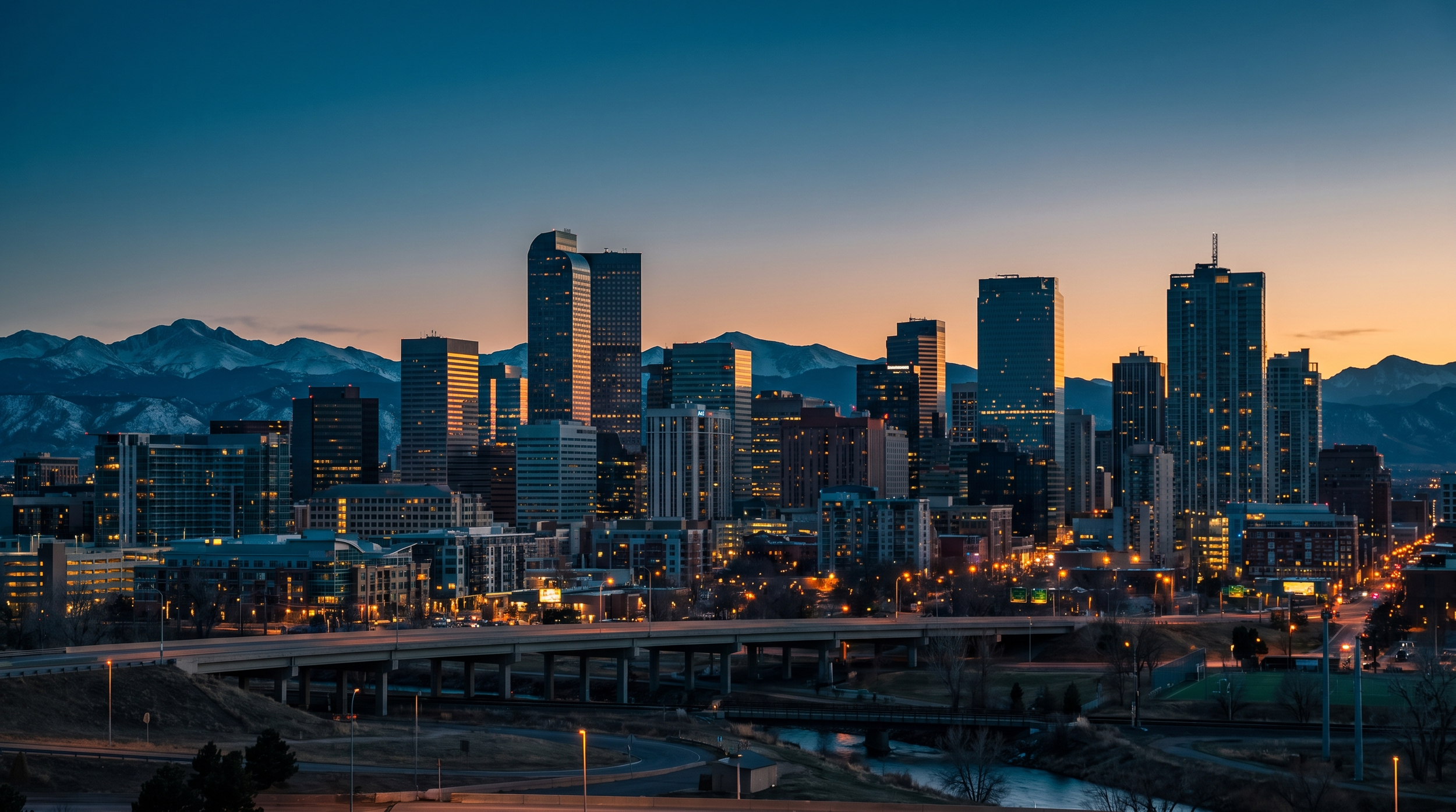
A mile up, the thin air and the afternoon sky rewrite a Denver call sheet before the marquee does, and a January stock show keeps the crew booked while other cities wait out winter.
Scroll. It gets specific.01The Ground Truth
At 5,280 feet, Denver's conventions, pro sports, and January stock show all answer to the altitude and the weather.
The hard part in Denver is rarely finding people. It is the two things the elevation puts on every call sheet. First, thin air: at a mile up the sun bites harder and both the crew and sea-level guests fade sooner, so hydration and a rotation plan ride along on outdoor builds. Second, the sky, which can turn a bluebird morning into a plains thunderstorm by mid-afternoon. Around those constraints sit the venues, the Colorado Convention Center and Ball Arena downtown, the Broncos at Empower Field at Mile High across the South Platte, and the National Western Stock Show that fills all of January.
Quick Answer
Denver, CO event-staff rates run $33.50 to $39.50 an hour for the core roles, $43.50 to $49.50 for team leads, and $50 to $70 for specialized crew like bartenders, AV techs, and brand ambassadors. Each figure is the whole cost: W-2 pay with workers' comp, general liability, and payroll taxes already folded in, so nothing is tacked on afterward.
One point of contact takes the order and confirms it inside 24 to 48 hours, or same day when a date sneaks up, with most builds locking 2 to 4 weeks out. The Denver wrinkle sits in the hours, not the rate: because Colorado owes daily overtime past 12 hours, any long single-day build gets its 12-hour line priced before the crew is confirmed.
Teams that booked TempGuru, in their own words

The staff we had onsite were amazing. They were polite, professional, and always willing to help. They made a meaningful impact on the success of our event.

Both staff were well suited for our event needs and were keen to help in any way possible.

You delivered excellent service from the very first contact, and Emmanuel was also great during the installation: very attentive, knowledgeable about the subject, and my team praised him highly.

02The Map
Downtown is tight and walkable. The altitude, not the map, is what stretches a build.
Denver clusters tight downtown. Within a few blocks of Union Station you have the Colorado Convention Center, Ball Arena, and the Bellco Theatre, close enough that a trade show, a Nuggets or Avalanche night, and a downtown concert can land on one weekend. Empower Field at Mile High sits a short hop west over the South Platte. North of the core, RiNo carries the brewery-and-activation circuit, Cherry Creek to the southeast handles the upscale galas, and the National Western Complex up in Globeville anchors the north end.
None of that is far. What actually stretches a Denver plan is the mile of elevation over it. A crew on a long outdoor load-in starts feeling 5,280 feet somewhere around hour six, which is why the sheet builds in relief rotations and water before it builds in anything else. From roughly July on, the afternoon monsoon can stack a thunderstorm over an open build with almost no notice, so a weather hold is standard, and the January runs at the National Western Complex get planned against snow and a slow I-25.
"People hear mile-high and think marketing. By hour six of an outdoor load-in, the altitude is the first thing on my call sheet and the last thing my crew forgets."Megan Hayward, Founder & CEO, TempGuru
Venue and logistics notes
Colorado Convention Center, downtown. A top-tier Mountain West hall with the Bellco Theatre built in. Freight comes off the dock, so the crew stages to the move-in slot and the badge desk is timed to the arrival window, not to doors.
Ball Arena and Empower Field at Mile High. Nuggets, Avalanche, and Broncos dates bring street closures and credentialed gates. Set a screening buffer ahead of doors, and get crew across the South Platte to the Mile High lots before the west side fills.
National Western Complex, Globeville. Sixteen January days of rodeo, livestock, and trade-show floor on the north end. The build days run long enough to cross the 12-hour overtime line, and winter load-ins plan around snow and I-25.
Open sky at 5,280 feet. On any outdoor build the sun sits closer and the afternoon monsoon moves quick, so the call sheet carries water, shade, and a weather hold before the first truck rolls.
03What We Staff
Convention floors and arena gates carry most weeks. January and the summer sky fill the rest.
Sort a Denver year by volume and the convention floor leads. The Colorado Convention Center's biggest weeks pull badge-desk staff, aisle and booth crews, and freight hands by the hundred. Right behind it are the gates: Ball Arena and Empower Field at Mile High need scanners, ushers, and rail crews to keep a sold-out house moving on event day.
After that comes the part that is purely Denver. The National Western Stock Show turns January into a 16-day run of rodeo, livestock, and trade-show crews. Summer hands the calendar to outdoor festivals, where the altitude-and-weather plan is half the job, and the year-round work rounds out with brand activations across the downtown hotels and the RiNo taprooms.
04The Math
Size the crew for thin air and a long day.
The roster to the left is built around gates, not seats: 47 billable, 4 team leads on the floor at about 11 staff each, ushers and crowd control scaled to the doors-open surge. Stagger call times around the security screen so crew clear the perimeter before the rush, not during it.
05The Clock
Two peaks book ahead: the January stock show and the summer festivals.
Book early and you lock the crew and the rate. Denver runs two peaks that most markets do not. January belongs to the National Western Stock Show, 16 straight days of livestock and rodeo crews while the rest of the country is quiet, and summer stacks the outdoor festivals where every call sheet plans around the altitude and the afternoon storm.
06The Rate
The rate you approve is the rate on the invoice.
There is no stack of line items here. A role carries one all-in hourly rate, with W-2 payroll, workers' comp, general liability, and the tax burden built into that single figure. Approve a crew size and a rate, and that is the math that reaches accounting, with no fees surfacing between the handshake and the final total.
| Role | Rate | Min shift |
|---|---|---|
| General labor / setup | $33.50–$39.50/hr | 4 hrs |
| Registration | $33.50–$39.50/hr | 4 hrs |
| Warehouse / logistics | $33.50–$39.50/hr | 4 hrs |
| Crowd control / ushers | $33.50–$39.50/hr | 4 hrs |
| Team leads / supervisors | $43.50–$49.50/hr | 4 hrs |
| Specialized (bar, AV, ambassadors) | $50–$70/hr | 4 hrs |
Colorado minimum wage is $19.29/hr. Every worker on this page is W-2, not 1099.
Rate basis: the TempGuru State of Event Staffing 2026 index, 345 markets.
07The Fine Print
Colorado adds a daily-overtime twist to the W-2 math.
In Colorado, the expensive shortcut is paying event staff as 1099 contractors: back taxes, penalties, and joint-employer liability under federal FLSA and Colorado workers' compensation law. Colorado owes overtime after 12 hours worked in a single day, on top of the federal 40-hour week, so long single-day builds like stock-show and convention move-ins get budgeted around the 12-hour line.
TempGuru runs every worker as a W-2 employee through a vetted partner agency that acts as the employer of record, carrying the workers' comp, general liability, and payroll taxes on each one. Classification and payroll responsibility sits with that employing agency; your own obligations can still depend on how you direct the work and on applicable law. As W-2 employees, the crew also fall under the workplace protections, including federal Title VII, that apply to the agency's other staff.
- W-2 employment, not 1099
- Workers' compensation insurance
- General liability coverage
- Payroll taxes: FICA, FUTA, SUTA
08The Model
When the sky turns at 5,280 feet, one call reaches the whole crew.
You talk to one coordinator. Behind them, TempGuru pulls vetted W-2 crews from a roster of partner agencies and holds the relationships and the paperwork.
One coordinator, one crew, one invoice. The afternoon a storm cell parks over your open-air build, you make one call, and the answer is already on the sheet: crew rotating through shade and water, the weather hold cued, the show still on track.
| The moment | Gig app | TempGuru |
|---|---|---|
| Someone no-shows at 6 a.m. | A support ticket | A coordinator with a name |
| Workers’ comp | Check the fine print | In the rate |
| Classification & payroll | Yours to sort out | The partner agency’s, as employer of record |
The difference shows up at 6 a.m., not in the demo.
09A Sample Plan
An illustrative staffing order.
Picture a summer headliner at Empower Field at Mile High, 72,000 in the stands, one long day from first truck to last. The clock, not the seating chart, drives the roster. At 6:30 the load-in crew and all four zone leads badge in to build barricade, stage, and the general-admission rail. Guest services arrives mid-afternoon to stand up hydration stations and ADA routes, because at 5,280 feet the crowd feels the elevation as much as the crew. An hour before the gates, crowd control and box office fold in for the doors-open surge.
The number that sets the budget is the 13-hour front end. Once the load-in crew and the leads pass 12 hours in a single day, Colorado's daily-overtime rule kicks in, so those hours are costed before anyone is booked, not reconciled after. Forty-seven people, one summer night, one planner who watched the forecast and priced the long day in advance.
10Your Move
Thin air, fast weather, long days. Covered.
Cheaper quotes are easy to find. What is rare is a payrolled, insured crew that can hold a mile-high build through a rolling thunderstorm, absorb a 13-hour day inside the overtime math, and answer to a single planner from load-in through teardown. That is the work we sign up for.

Your Denver coordinator
Michelle Roberts
Michelle Roberts coordinates TempGuru's crews across the Southwest, West, and the corridor from Indiana to Texas. A retired Army Colonel, she has led staffing on TempGuru's military events.
(904) 206-8953 is TempGuru's national staffing desk. Every city, including Denver, runs through it.
Denver Event Staffing FAQs
How much does event staffing cost in Denver?
How fast can I get staff in Denver?
Are workers W-2 or 1099?
Does Denver's altitude change a staffing plan?
When is the busy season?
What can TempGuru staff here?
Is TempGuru an event staffing agency in Denver?
What is event staffing?
Sources & methodology · verified July 2026
- Min Wage · denvergov.org
- Workers Comp Law · content.leg.colorado.gov
- Colorado Convention Center · denverconvention.com
- Colorado Convention · denverconvention.com
- Ball Arena · ballarena.com
- Empower Field · empowerfieldatmilehigh.com
- National Western Complex · nationalwesterncomplex.com
- National Western · nationalwestern.com
Venue capacities, wage floors, statutes, and event dates for Denver are verified against the official sources above. Rate ranges derive from the TempGuru State of Event Staffing 2026 index.
