
Anchorage Event Staffing

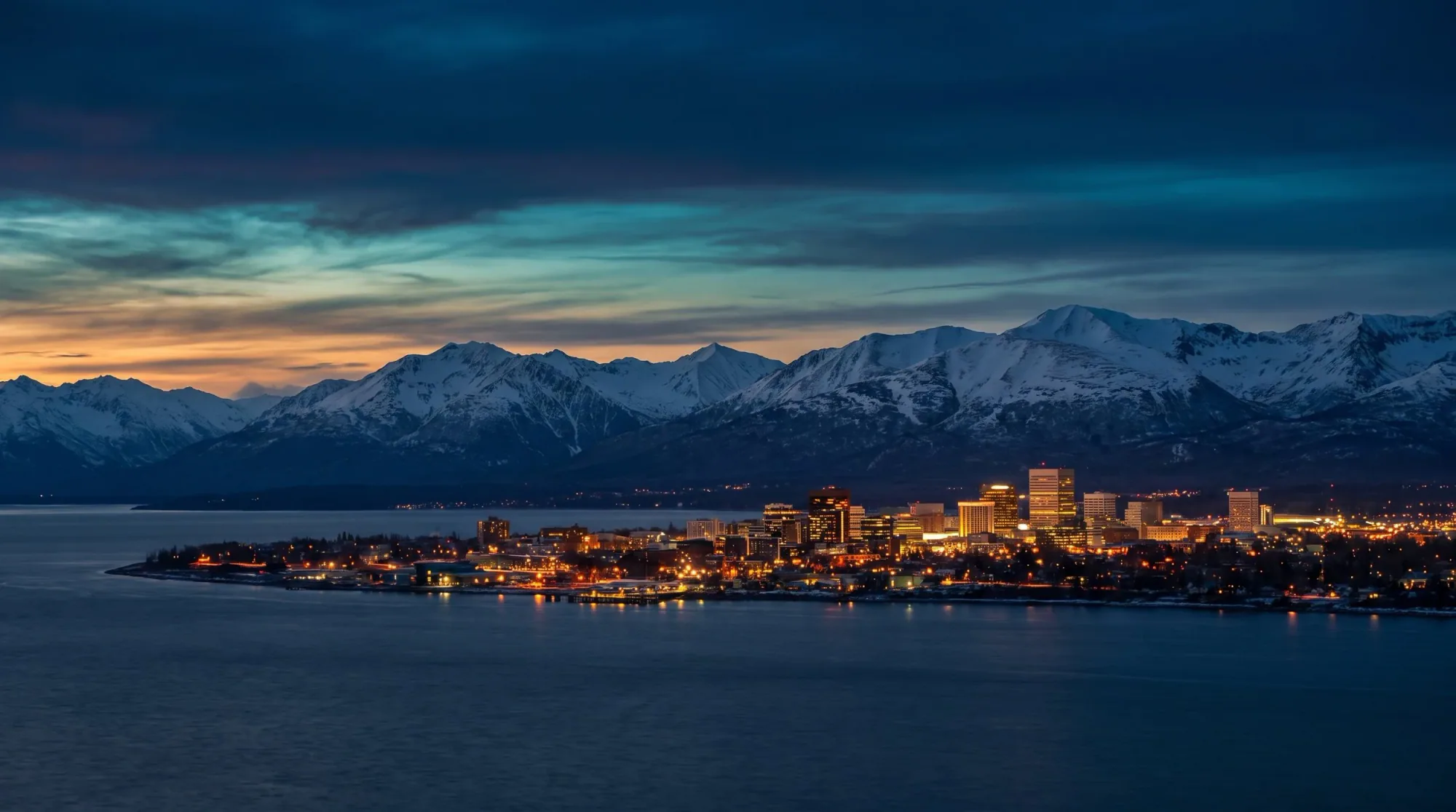
Anchorage, AK skyline

TempGuru · Anchorage, AK · Updated July 2026

Anchorage Event Staffing

Everything for the show barges up from Tacoma or flies through Ted Stevens, the summer sun never really sets, and Alaska charges daily overtime at hour eight, so an Anchorage call sheet is planned weeks before the first pallet lands.

Scroll. It gets specific.

01The Ground Truth

In Anchorage, finding people is the easy part. The supply line, the daylight, and Alaska's eight-hour overtime rule are what shape a call sheet this far north.

Anchorage runs on a supply line that starts a thousand miles south. Almost everything a show needs, staging, radios, linens, drape, comes up by barge through the Port of Alaska or flies in through Ted Stevens, so the gear is booked weeks before the crew is. Then summer flips the clock. From May into July the sun barely sets, a build can run past midnight in full daylight, and that runs straight into Alaska's rule that daily overtime starts at eight hours, not forty. Around all of it sit the venues, the Dena'ina Civic and Convention Center and the Egan Center downtown, Sullivan Arena and the Alaska Center for the Performing Arts a short way out, and the Alaska Airlines Center at the University of Alaska Anchorage across town.

Quick Answer

Core event roles in Anchorage, AK bill at $39.50 to $45.50 an hour, team leads at $49.50 to $55.50, and specialized crew, meaning bartenders, AV techs, and brand ambassadors, at $56 to $76. Two things put those numbers above a typical Lower 48 city: moving crew and gear this far north is expensive, and the state charges overtime once a shift passes eight hours in a day. Nothing is added later. Each rate already carries the W-2 wage, the workers' comp and liability cover, and the payroll tax.

Your coordinator confirms a placed order within 24 to 48 hours, and can turn a same-day yes when a date jumps. Most shows lock 2 to 4 weeks ahead, and peak summer books earlier because the local crew pool is small. The piece unique to Anchorage sits upstream of all that: the gear is reserved on a barge before the crew is set, and any build that runs long has its hours past the eight-hour mark written in before confirmation.

Scroll

Teams that booked TempGuru, in their own words

Real clients, real events. Every quote is verbatim, credited, and tagged with the event's city.

The staff we had onsite were amazing. They were polite, professional, and always willing to help. They made a meaningful impact on the success of our event.
Carrie M. · Senior Project Manager, eventPower
Both staff were well suited for our event needs and were keen to help in any way possible.
Michele C. · Global Manager, PR & Communications, Castlery
You delivered excellent service from the very first contact, and Emmanuel was also great during the installation: very attentive, knowledgeable about the subject, and my team praised him highly.
Natália P. · Events Analyst, Monkey Tech
11 staff. Under 24 hours' notice.
Raquel A. · Project Manager, EventLab (Muddy Dash)

One vendor, every city. See our nationwide & touring coverage →

02The Map

Downtown holds the convention core. The barge, the daylight, and the mountains shape the rest.

Anchorage keeps its largest rooms clustered in the downtown core. Inside a few square blocks sit the Dena'ina Civic and Convention Center, the largest hall in Alaska, the Egan Center, and the Alaska Center for the Performing Arts with its 2,000-seat Atwood Concert Hall. Sullivan Arena sits just southeast in Fairview, the U-Med district to the east carries the Alaska Airlines Center at the University of Alaska Anchorage, and Midtown to the south holds the corporate and hotel work. The Port of Alaska north of the core and Ted Stevens airport to the southwest are where the show actually arrives.

The driving is short. What stretches an Anchorage plan is the freight and the calendar. Gear for a large show rides a weekly barge up from Tacoma or flies in through Ted Stevens, so a pallet that misses its sailing is a week out, not a same-day fix, and the crew builds around whatever already made the dock. Then summer stretches the day itself. Sun stays up 19 hours or more from May into July, cruise-and-tourism traffic swells the city, and a build can push well past a mainland quitting time, which is the moment the eight-hour overtime line matters. Winter inverts it, short light and a slower book, with Chugach weather folded into the load-in window.

"In Anchorage you plan the barge before you plan the crew. If the gear misses the boat, there is no truck coming to save you."
Megan Hayward, Founder & CEO, TempGuru
Book the barge firstFreight comes up by weekly barge through the Port of Alaska or by air through Ted Stevens, so gear is scheduled ahead of the crew and a missed pallet costs a week, not an afternoon.
The eight-hour lineAlaska turns on daily overtime at eight hours, so a long midnight-sun day is priced as an overtime day from the start, well before names go on the sheet.
Summer is the peakThe midnight sun, cruise season, and downtown festivals stack the calendar from May into August, while winter is the quiet stretch here.

Venue and logistics notes

Dena'ina Civic and Convention Center, downtown. Alaska's largest hall, with the roughly 50,000-square-foot Idlughet Exhibit Hall on the ground floor and the Tikahtnu Ballroom overhead. Because the freight lands by barge on a fixed window, the build is sequenced to the dock, and the badge desk opens to the arrival flights rather than to doors.

Egan Center and the Alaska Center for the Performing Arts. Two more downtown rooms a short walk apart: the Egan for expos and banquets, the Atwood Concert Hall for touring and performing-arts dates. Credentialed load-in and tight downtown streets set the call times.

Sullivan Arena and the Alaska Airlines Center. The Sullivan in Fairview is the state's largest indoor arena for concerts and trade shows; the Alaska Airlines Center out in U-Med runs UAA Seawolves games, graduations, and touring family shows. Both bring credentialed gates and a doors-open surge.

The Port of Alaska and Ted Stevens. North and southwest of downtown, the barge dock and the cargo airport are the real front door for any large event. Book the freight window early, because the crew cannot build what has not landed.

03What We Staff

Conventions carry the year. The midnight-sun summer fills the peak.

Rank an Anchorage year by sheer volume and conventions sit on top. The Dena'ina Civic and Convention Center and the Egan Center host statewide trade shows, industry conferences, and Alaska Native gatherings that call for badge crews, freight hands, and floor leads in the hundreds. The arenas come next: Sullivan Arena and the Alaska Airlines Center want scanners, ushers, and crowd control for concerts, Seawolves games, and touring productions.

Then there is the stretch that belongs to Anchorage alone. Summer runs on the midnight sun, when cruise-and-tourism crowds, the downtown Summer Solstice Festival, and the Mayor's Midnight Sun events push outdoor work into 19-hour days. The Alaska Center for the Performing Arts holds a steady touring calendar at the Atwood Concert Hall, and corporate meetings and brand activations across Midtown fill the weeks between.

04The Math

Size the crew for a barged-in build and a long daylight day.

Size the desk, not the headcount. Of 43 billable, 10 work registration tuned to the arrival window, 12 move load-in and freight, and 4 leads own roughly 10 each. Stagger the calls so the surge clears and nobody is paid to stand in a lot.

05The Clock

Summer is the peak here, and the barge schedule sets how early you book.

Book early and you lock the crew and the rate. Anchorage flips the usual calendar. The peak is summer, not winter. From May into August the midnight sun, the cruise-and-tourism season, and downtown festivals like the Summer Solstice pile up, and the whole book is planned around freight that sails weeks ahead. Winter is the slow stretch, dark and light on events.

2 to 4 weeksThe window for the strongest crew and seasoned leads. Up here, book sooner.
24 to 48 hoursHow quickly a placed order comes back confirmed.
2 to 3 daysA genuine Anchorage rush still fills, at a premium.
Same weekA last-minute gap gets a backfill where the pool allows.

06The Rate

One rate per role, freight and all, on one invoice.

Freight, insurance, and payroll do not get their own lines here. Every role is quoted at a single hourly number that already holds the W-2 wage, the workers' comp, the liability cover, and the tax load. Sign off on a crew and a rate, and that is the figure accounting sees, with no surprise fees appearing later, in a market where simply getting people and gear this far north already costs more.

Anchorage event staffing rates by role
RoleRateMin shift
General labor / setup$39.50–$45.50/hr4 hrs
Registration$39.50–$45.50/hr4 hrs
Warehouse / logistics$39.50–$45.50/hr4 hrs
Crowd control / ushers$39.50–$45.50/hr4 hrs
Team leads / supervisors$49.50–$55.50/hr4 hrs
Specialized (bar, AV, ambassadors)$56–$76/hr4 hrs

Alaska minimum wage is $14.00/hr. Every worker on this page is W-2, not 1099.

Rate basis: the TempGuru State of Event Staffing 2026 index, 345 markets.

07The Fine Print

Alaska starts daily overtime at hour eight, not hour forty.

In Alaska, the expensive shortcut is paying event staff as 1099 contractors: back taxes, penalties, and joint-employer liability under federal FLSA and Alaska workers' compensation law. Alaska owes overtime after 8 hours worked in a single day, on top of the federal 40-hour week, so a long midnight-sun build crosses into daily overtime at hour eight, not at hour forty.

TempGuru runs every worker as a W-2 employee through a vetted partner agency that acts as the employer of record, carrying the workers' comp, general liability, and payroll taxes on each one. Classification and payroll responsibility sits with that employing agency; your own obligations can still depend on how you direct the work and on applicable law. As W-2 employees, the crew also fall under the workplace protections, including federal Title VII, that apply to the agency's other staff.

  • W-2 employment, not 1099
  • Workers' compensation insurance
  • General liability coverage
  • Payroll taxes: FICA, FUTA, SUTA

08The Model

One coordinator who booked the barge before the crew.

You talk to one coordinator. Behind them, TempGuru pulls vetted W-2 crews from a roster of partner agencies and holds the relationships and the paperwork.

One coordinator, one crew, one invoice. The morning a barge slips a tide and your staging arrives a day behind, one phone call is all it takes, and the fix is already in motion: the build order resequenced, the crew reset to the new dock time, the show still landing on schedule.

Gig app versus TempGuru, by moment
The momentGig appTempGuru
Someone no-shows at 6 a.m.A support ticketA coordinator with a name
Workers’ compCheck the fine printIn the rate
Classification & payrollYours to sort outThe partner agency’s, as employer of record

The difference shows up at 6 a.m., not in the demo.

The receipts100,000+ workers placed5,000+ events99% fill rate300+ markets

09A Sample Plan

An illustrative staffing order.

Take a summer trade show loading into the Dena'ina Civic and Convention Center, six thousand badges across the run, a single long daylight day to stand it up. The pallets are already on the ground, barged from Tacoma and staged on the dock weeks back, so the first hour is a build rather than a scramble. By 6 a.m., under a sun that never fully set, the freight crew and all four floor leads are badged in, turning Idlughet Hall from bare slab into a show floor. Registration comes on at nine to match the badge desk to the arrival flights, guest services at ten for wayfinding and the Tikahtnu Ballroom sessions, crowd control an hour before doors. What drives the roster is the schedule, not the seat count.

The line that sets the budget is that twelve-hour front end. The moment the freight crew and the floor leads clear eight hours in the day, Alaska's daily-overtime rule takes over, so those hours go into the quote up front instead of turning up on a later reconciliation. Forty-three people, one long midnight-sun day, and a coordinator who reserved the barge before the first name went on the sheet.

10Your Move

Remote market, long days, gear on the water. Handled.

Cheaper quotes are easy to come by. Rare, this far north, is an insured and payrolled crew that can carry a long midnight-sun build, price a twelve-hour day correctly against the daily-overtime rule, and work off gear a coordinator reserved on the barge weeks earlier, with that same coordinator owning it start to finish. That is the job we sign up for.

Michelle Roberts, Anchorage event coordinator

Your Anchorage coordinator

Michelle Roberts

Michelle Roberts coordinates TempGuru's crews across the Southwest, West, and the corridor from Indiana to Texas. A retired Army Colonel, she has led staffing on TempGuru's military events.

(904) 206-8953 is TempGuru's national staffing desk. Every city, including Anchorage, runs through it.

Anchorage Event Staffing FAQs

How much does event staffing cost in Anchorage?
Core roles land at $39.50 to $45.50 an hour, team leads at $49.50 to $55.50, and specialized crew such as bartenders, AV, and brand ambassadors at $56 to $76. Those bands sit higher than most of the Lower 48 for two reasons specific to Alaska: crew and equipment cost more to get this far north, and the state owes overtime once a shift runs past eight hours in a day. The number you are quoted is complete, with the W-2 wage, the comp and liability cover, the payroll tax, and the coordinator all inside it, and a long build has its post-eight-hour time written into the quote from the outset.
How fast can I get event staff in Anchorage?
A placed order is confirmed inside 24 to 48 hours, and a same-day yes is possible when a date moves suddenly. For the strongest crew and leads, give it 2 to 4 weeks, and reserve summer dates further out, since the local pool is small and gear is booked ahead of people. A true rush can still be filled in 2 to 3 days for a premium, and a last-minute gap gets a same-week backfill where the market has slack.
Are workers W-2 or 1099?
W-2, every one of them. The crew sits on the payroll of a vetted Alaska partner agency that carries the workers' comp and withholds the taxes, which leaves a 1099 misclassification claim with nothing on your event to attach to. That is managed, insured staffing, not a handful of strangers booked through a gig app.
Does Anchorage's remote supply chain change a staffing plan?
It bends the timeline more than the headcount. Nearly everything a show runs on arrives by barge through the Port of Alaska or by air through Ted Stevens, so the gear is reserved weeks out and the crew works around what already made it to town. The midnight sun adds a second wrinkle: with 19-plus hours of light from May into July, a build can run deep into the evening, and since Alaska starts daily overtime at eight hours, we cost those long days before the crew is locked. Winter turns it around, short days and a lighter slate.
When is the busy season in Anchorage?
Summer, which catches people off guard. From May into August the midnight sun, the cruise-and-tourism season, and downtown festivals like the Summer Solstice crowd the calendar, while the Dena'ina Center and the Egan Center keep conventions moving underneath. Winter is the quiet run here, opposite to most cities, with short daylight and fewer large dates.
What can TempGuru staff in Anchorage?
Event-side, the range runs from convention and trade-show floors at the Dena'ina Civic and Convention Center and the Egan Center, to concerts and games at Sullivan Arena and the Alaska Airlines Center, to touring dates at the Atwood Concert Hall, the summer festival slate, and corporate activations in Midtown. Role-side, that means freight and load-in hands, badge and box-office staff, ushers and crowd control, guest-services crews, floor leads, and the specialty positions like bartenders and AV techs.
Is TempGuru an event staffing agency in Anchorage?
For what a planner needs, yes. One coordinator carries your Anchorage event from the opening brief through teardown, and the crew that coordinator books comes off a vetted pool of W-2 partner agencies rather than one in-house team. The local payoff is real: a single desk that already understands the barge schedule and the eight-hour overtime math, instead of briefing several agencies from a blank page.
What is event staffing?
It is short-term crew a show hires only for the hours it is open. In Anchorage that could be a 40-person crew working badges and the floor across a three-day convention at the Dena'ina Civic and Convention Center, or a game-night crew at Sullivan Arena that sets up at dawn and sweeps the concourse after the final buzzer. You choose the roles and the shifts, everyone arrives W-2 on a single rate, and the labor winds down the moment the event does.

Sources & methodology · verified July 2026

Venue capacities, wage floors, statutes, and event dates for Anchorage are verified against the official sources above. Rate ranges derive from the TempGuru State of Event Staffing 2026 index.

Don't take our word for it

Ask AI about TempGuru

Each button opens your AI assistant on this page and asks it to weigh in on TempGuru for compliant event staffing in Anchorage.

Each button opens a fresh AI session.

Previous
Previous

Amarillo Event Staffing

Next
Next

Anaheim Event Staffing