
Chicago Event Staffing
TempGuru · Chicago, IL · Updated July 2026
Staffing the largest convention floor in North America, where the job is crewing at that scale and pricing every hour to a local wage floor above the state one.
Scroll. It gets specific.01The Ground Truth
Chicago runs on the largest convention floor in North America, and every hour on it prices to a local wage floor, not the state one.
McCormick Place is the largest convention center in North America, 2.6 million square feet of exhibit hall across four buildings on the lakefront, about a mile south of the Loop. A single national trade show can fill more floor than another city's entire center, so the crew counts run big and the move-in stages building by building. Two things set the plan: how you staff at that scale across the North, South, and West buildings and Lakeside Center, and the Chicago and Cook County minimum wage, which sits above the Illinois state floor and steps up every July.
Quick Answer
In Chicago you order by the role and the rate comes finished. Most positions run $34 to $40 an hour, floor leads $44 to $50, and the specialty roles a big show brings in, bartenders, AV, and brand ambassadors, run $50.50 to $70.50. Each number already carries the W-2 wage, payroll taxes, general liability, and workers' comp, and each already sits at the Chicago and Cook County local minimum, so nothing new appears once the show wraps.
You deal with one coordinator from the first call, never a phone tree. Most Chicago dates land on the board 2 to 4 weeks ahead, a placed order confirms in 24 to 48 hours, and a genuine rush puts crew on site in 2 to 3 days at a premium. The wrinkle is the rotating giants: when the Chicago Auto Show, the housewares show, or IMTS takes McCormick Place, the pool commits early, so give those the longest runway you can.
Teams that booked TempGuru, in their own words

The staff we had onsite were amazing. They were polite, professional, and always willing to help. They made a meaningful impact on the success of our event.

Both staff were well suited for our event needs and were keen to help in any way possible.

You delivered excellent service from the very first contact, and Emmanuel was also great during the installation: very attentive, knowledgeable about the subject, and my team praised him highly.

02The Map
The venues are spread across the city, and McCormick Place is a complex, not a hall.
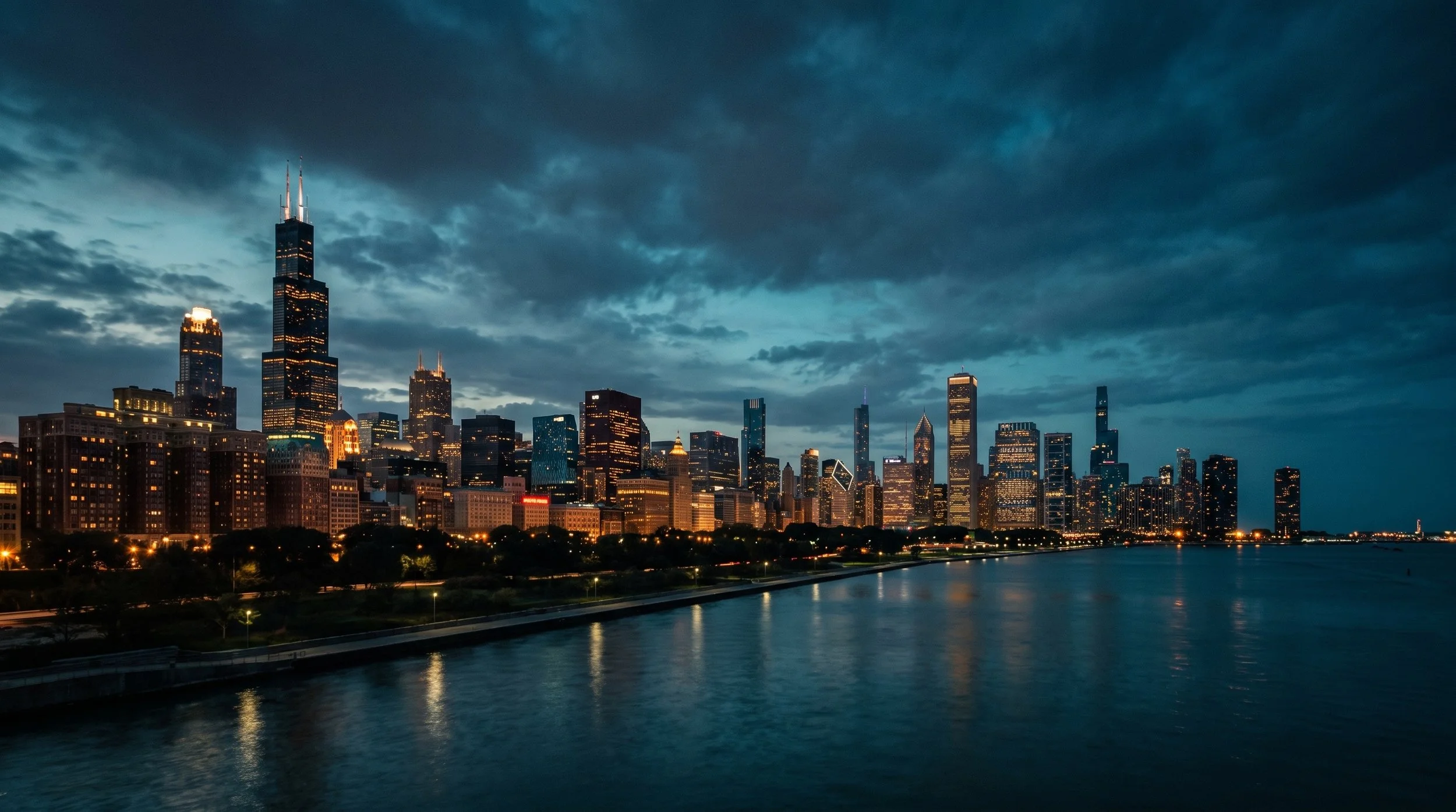
Chicago does not put its rooms in one walkable cluster. The South Loop holds McCormick Place and, next door at McCormick Square, Wintrust Arena, the anchor of the whole calendar on the near-south lakefront. The West Loop and the Near West Side carry United Center and the Fulton Market activations and corporate dinners. Streeterville runs the lakefront tourism and the Navy Pier galas and shows, and the Museum Campus keeps Soldier Field and its stadium dates on the water south of Grant Park. Each one is its own node with its own load-in, so a full weekend is several separate orders, not one crew walking between gates.
McCormick Place is the part that sets the tone. It is four connected buildings and 2.6 million square feet, with its own marshaling yard that meters the trucks in and its own freight doors feeding the North, South, and West halls. The plan reads as a staged move-in, one building at a time, not a single dock window. We size the crew to the hall and back the call times off the marshaling-yard schedule, and because every hour bills to the Chicago and Cook County minimum, the rate math starts at the local floor rather than the Illinois one. Lake Michigan adds the rest: an outdoor build at Soldier Field or a load-in over the water at Navy Pier carries a wind-and-weather call the lakefront writes for you.
"At McCormick Place the problem is never finding the hall. It is the size of the floor and the marshaling yard. You staff one building, then the next building."Megan Hayward, Founder & CEO, TempGuru
Venue and logistics notes
McCormick Place, South Loop. The largest convention center in North America, four connected buildings on the lakefront with a marshaling yard that meters the freight. Stage the move-in one building at a time and back every call time off the yard schedule, not the show-floor open.
United Center, Near West Side. The Bulls and Blackhawks arena west of the Loop, with concert nights stacked on the game calendar. Its own lots and event-day street pattern, so staff it as a separate node instead of drawing off a downtown pool.
Soldier Field, Museum Campus. The Bears and Chicago Fire on the lakefront off Lake Shore Drive, south of Grant Park. Open-air and on the water, so the call sheet carries wind and weather cover from the lake and a screening buffer before the gates.
Navy Pier and Festival Hall, Streeterville. Festival Hall runs 170,000 square feet of galas, concerts, and trade shows out on the pier. Load-in comes over the water and the pier access is tight, so freight windows and staging get reserved early.
03What We Staff
Trade shows lead. Then the arena, the stadium, and the lakefront.
Sort a Chicago calendar by volume and the conventions and trade shows sit on top, because McCormick Place runs some of the largest shows in the world. The Chicago Auto Show fills the halls every February, the housewares show follows in March, the National Restaurant Association Show takes May, and IMTS, the manufacturing-technology show, packs the buildings every other fall. These are move-in-heavy weeks, loaded toward freight, booth build, and badge halls scaled to a floor that runs into the hundreds of thousands of square feet.
Sports and concerts come next, with United Center stacking Bulls and Blackhawks nights against arena tours and Soldier Field holding the Bears and Chicago Fire dates on the lakefront. Then the range that makes the city its own market. Corporate and meeting work fills the Loop hotels and the Fulton Market rooms, festivals and lakefront events push crowd and gate crews onto Navy Pier and the parks, and brand activations want ambassadors who can hold a script inside a busy hall or a Michigan Avenue pop-up.
04The Math
Size the crew to the building, not the badge count.
Size the desk, not the headcount. Of 52 billable, 12 work registration tuned to the arrival window, 22 move load-in and freight, and 4 leads own roughly 12 each. Stagger the calls so the surge clears and nobody is paid to stand in a lot.
05The Clock
The big shows claim the crew pool first.
Book early and you lock the crew and the rate. Chicago peaks with the big rotating trade shows: the Chicago Auto Show in February, the housewares show in March, the National Restaurant Association Show in May, and IMTS every other fall, and when one of those takes McCormick Place it takes the city's crew pool with it. Winter off the lake hangs a wind-and-weather call on every outdoor build.
06The Rate
One rate per role, already at the city floor.
Ask for a role and one hourly number comes back, not three vendor quotes to reconcile. Workers' comp, general liability, and payroll taxes already sit inside it, and it is already priced to the Chicago and Cook County minimum, so the crew you approve is the crew that works and the crew that bills, at the number you signed.
| Role | Rate | Min shift |
|---|---|---|
| General labor / setup | $34–$40/hr | 4 hrs |
| Registration | $34–$40/hr | 4 hrs |
| Warehouse / logistics | $34–$40/hr | 4 hrs |
| Crowd control / ushers | $34–$40/hr | 4 hrs |
| Team leads / supervisors | $44–$50/hr | 4 hrs |
| Specialized (bar, AV, ambassadors) | $50.50–$70.50/hr | 4 hrs |
Illinois minimum wage is $15.00/hr. Every worker on this page is W-2, not 1099.
Rate basis: the TempGuru State of Event Staffing 2026 index, 345 markets.
07The Fine Print
A 1099 roster does not get you under the Chicago wage floor.
In Illinois, the expensive shortcut is paying event staff as 1099 contractors: back taxes, penalties, and joint-employer liability under federal FLSA and Illinois workers' compensation law. Chicago and Cook County set their own minimum wages above the $15 Illinois floor, $17.05 an hour inside the city as of July 2026, and both step up every July, so a crew working an event within city limits is budgeted to the local minimum, not the state one.
TempGuru runs every worker as a W-2 employee through a vetted partner agency that acts as the employer of record, carrying the workers' comp, general liability, and payroll taxes on each one. Classification and payroll responsibility sits with that employing agency; your own obligations can still depend on how you direct the work and on applicable law. As W-2 employees, the crew also fall under the workplace protections, including federal Title VII, that apply to the agency's other staff.
- W-2 employment, not 1099
- Workers' compensation insurance
- General liability coverage
- Payroll taxes: FICA, FUTA, SUTA
08The Model
One coordinator across all four buildings.
You talk to one coordinator. Behind them, TempGuru pulls vetted W-2 crews from a roster of partner agencies and holds the relationships and the paperwork.
One coordinator, one crew, one invoice. When the Auto Show move-in bumps your freight window and the marshaling yard backs up two buildings over, you call one person, and the call times were resequenced across the halls before you finished the sentence.
| The moment | Gig app | TempGuru |
|---|---|---|
| Someone no-shows at 6 a.m. | A support ticket | A coordinator with a name |
| Workers’ comp | Check the fine print | In the rate |
| Classification & payroll | Yours to sort out | The partner agency’s, as employer of record |
The difference shows up at 6 a.m., not in the demo.
09A Sample Plan
An illustrative staffing order.
The heaviest week on the board is a McCormick Place move-in. Picture a national trade show taking the North and South buildings for four days, about forty-five thousand people once the floor opens, but the week is decided before any of them arrive. The build keys off the marshaling yard: eight on logistics work the yard check-in and the freight doors from four-thirty in the morning, and twenty-two on general labor build booths and move freight across two buildings behind them. The badge halls come up next, twelve on registration opening the North and South entrances, and six on guest services point the crowd across a concourse that runs the length of several city blocks.
Four leads hold it, one to a hall, radioed back to the yard. Fifty-two people across four days, booked as one crew and run off a single coordinator's sheet, every hour billed at the Chicago and Cook County floor rather than the state minimum. The size of the building is the whole job here: you staff one hall, then the next, and the marshaling yard sets the clock the entire time.
10Your Move
The largest floor in the country, staffed as one order.
A cheaper crew is easy to find in a market this size. What is hard is a McCormick Place move-in staffed W-2 from the first shift, priced to the local floor, and held together by one coordinator who had the marshaling yard and your call times before the first truck rolled in. That is the order we take.

Your Chicago coordinator
Michelle Roberts
Michelle Roberts coordinates TempGuru's crews across the Southwest, West, and the corridor from Indiana to Texas. A retired Army Colonel, she has led staffing on TempGuru's military events.
(904) 206-8953 is TempGuru's national staffing desk. Every city, including Chicago, runs through it.
Chicago Event Staffing FAQs
How much does event staffing cost in Chicago?
How fast can I get staff in Chicago?
Are the crews W-2 or 1099 in Chicago?
How does McCormick Place change a staffing plan in Chicago?
When is the busy season in Chicago?
What can TempGuru staff in Chicago?
Is TempGuru an event staffing agency in Chicago?
What is event staffing?
Sources & methodology · verified July 2026
- Min Wage · labor.illinois.gov
- Min Wage · employerpass.com
- Min Wage · govdocs.com
- Workers Comp Law · ilga.gov
- Mccormick · mccormickplace.com
- United Center · en.wikipedia.org
- Soldier Field · soldierfield.com
- Navy Pier · navypier.org
- Chicago Marathon · chicagomarathon.com
- Lollapalooza · lollapalooza.com
Venue capacities, wage floors, statutes, and event dates for Chicago are verified against the official sources above. Rate ranges derive from the TempGuru State of Event Staffing 2026 index.
