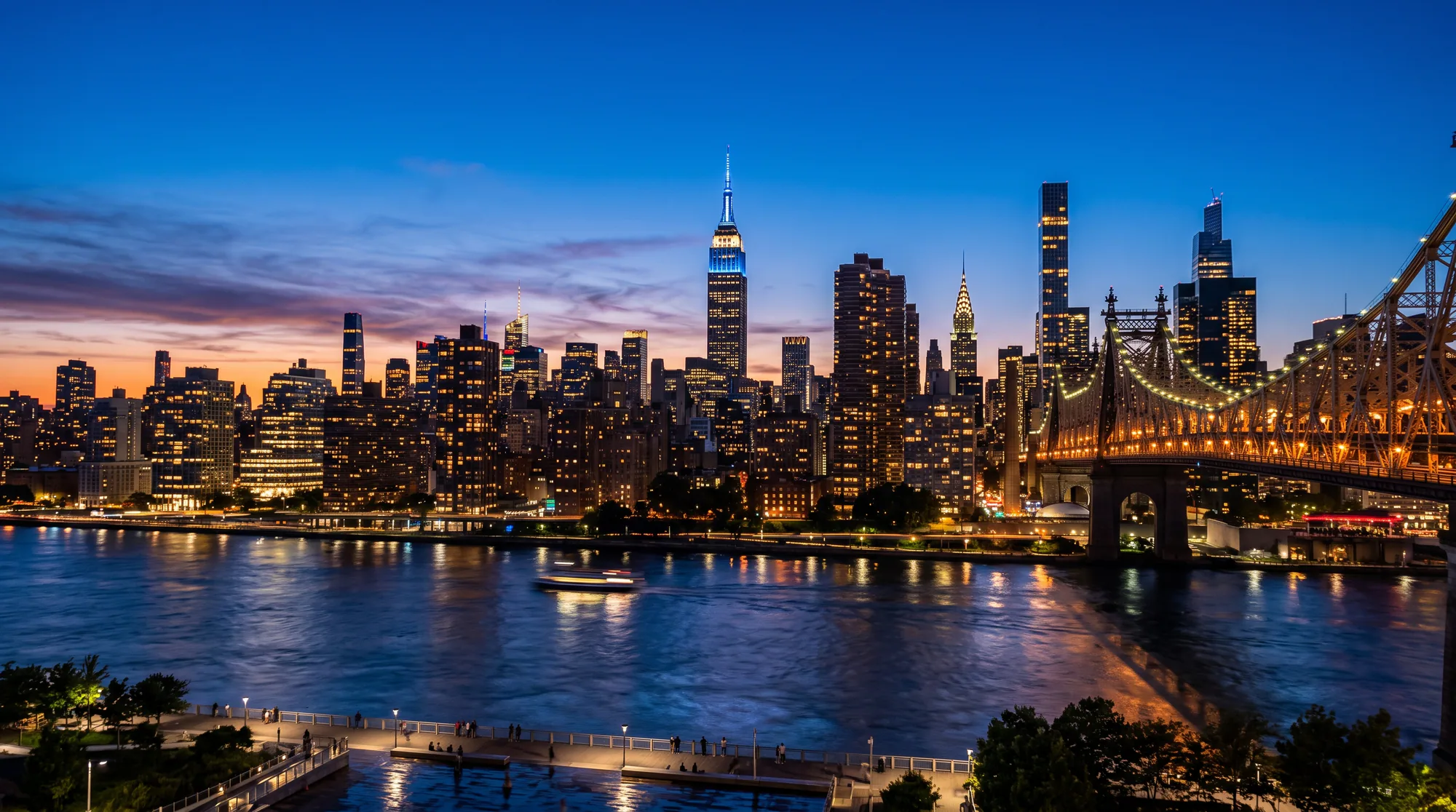
General Labor in New York City
General Labor
in New York City
Rate Range
$23-$33/hr
Team Size
20-80
Fill Rate
92%
Megan Hayward
Founder & CEO, TempGuru
“Javits Center shows are massive. We staff them differently because the volume of visitors is overwhelming. Logistics expertise is essential.”
Key Takeaways
Key Advantage
Flexible team sizes from 20-80 — scaled to your New York City event
Transparent Rates
Seasonal rate adjustments transparent and communicated upfront
Rapid Deployment
Same-day deployment available for urgent New York City staffing needs
Always On
24/7 support for multi-day events across the New York City metro
Overview
New York City's event market sets a high bar for general labor. The difference shows up in execution — trained general labor handle financial services and investment symposiums and museum exhibitions and art world galas without missing a beat. That's why event planners in the Brooklyn and Midtown Manhattan areas increasingly turn to staffing partners.
Before a single crew member clocks in, New York compliance has to be locked down. Food handlers require NYC certification within 30 days. This directly impacts scheduling and team composition. Then there's the New York City factor: NYC's event culture is fast-paced, critical, and sophisticated. Staff should be polished, quick-witted, and unflappable. Attendees are demanding, well-traveled, and notice details. Excellence is expected, not celebrated.
In New York City's competitive event market, general labor must deliver on multiple fronts. When general labor focus on cost efficiency — general labor provides maximum value-per-dollar compared to specialized trades or permanent venue staff, everything else falls into place. Then there's getting there: Most event staff use the subway; it's cheaper and faster than cabs. These aren't details you can figure out on event day.
Summer is warm and humid (75-85°F). For general labor working museum exhibitions and art world galas in New York City, this means adapting workflows and crew rotations. Fall is ideal (55-70°F). We build weather contingencies into every staffing plan.
Duties
Setup and teardown assistance
Assist with stage setup, chair and table placement, booth assembly, decorative element installation, and safe structural
Load-in and load-out logistics
Receive and direct vendor deliveries, move equipment from loading dock to event areas, manage inventory staging, coordin
Grounds maintenance and preparation
Rake and level outdoor spaces, remove debris, prepare dirt or grass areas, manage water drainage, ensure safe walking su
Signage and wayfinding installation
Install directional signs, parking signage, entrance banners, ADA accessibility markers, temporary fencing, and temporar
Equipment movement and positioning
Operate hand trucks and dollies, coordinate heavy lifts, position sound/lighting equipment, move vendor displays, manage
Parking lot and facility management
Direct vehicle traffic, monitor parking areas, manage lot cleanliness, coordinate with security on access control, repor
New York City-specific protocol
Follow Cipriani Wall Street's operational guidelines and security protocols
Local coordination
Navigate Brooklyn neighborhood logistics and local vendor relationships
New York City General Labor Rates (2026)
Our New York City general labor rates range from $23-$33/hr depending on experience, certifications, and event demands.
Standard events near Midtown Manhattan and Brooklyn: $23-$25/hour. High-profile events at Barclays Center: $26-$33/hour.
Seasonal adjustments: Fall is ideal (55-70°F). Peak-season premiums of $2-4/hour apply during New York City's busiest months.
New York overtime rules apply at 1.5x base after 8 hours/day. We build this into event cost projections upfront.
Food handlers require NYC certification within 30 days. All compliance costs are baked into our rates — what you see is what you pay.
How to Hire
Tell Us What You Need
Tell us your venue and event type — Fashion Week (frenetic), corporate financial conference (polished), museum gala (sophisticated), or Broadway event (theatrical)? Each demands different crew profiles.
We Build Your Crew
We match you with NYC-based professionals who understand Manhattan sophistication and Brooklyn cool. For Fashion Week, we pull top-tier runway and backstage crews. For galas, we source luxury-service specialists.
Your Team Shows Up Ready
Your team arrives via subway, on time (early arrival built into the brief). We do a thorough pre-event walkthrough because NYC venues are complex. Our NYC coordinator is embedded throughout because logistics move fast.
How TempGuru Staffs General Labor Across New York City
Our New York City operation covers everything from financial services and investment symposiums at Barclays Center to museum exhibitions and art world galas in Midtown Manhattan. 4B in economic impact. We've built our general labor talent pool to match that demand with consistent quality.
Every general labor deployment in New York City starts with venue-specific prep. Cipriani Wall Street has different requirements than Brooklyn pop-ups. Our coordinators brief crews on layout, protocols, and local expectations before they arrive.
New York City General Labor Market Intelligence
The Economics of General Labor in New York City
Event staffing economics in New York City are shaped by several factors unique to the New York market. All event staff need background checks. When you add general labor rates of $23-$33/hr to compliance overhead, the total cost per crew member runs 25-35% above the hourly rate.
4B in economic impact. That demand supports current rate levels and creates opportunities for experienced general labor to command premiums. Venues like Madison Square Garden and event types like financial services and investment symposiums pay at the top of the range, while standard Midtown Manhattan events fall in the middle.
General Labor in New York City: The Full Picture
New York City general labor represents the most complex and demanding environment in the country. When you're setting up at the Jacob K. Javits Convention Center, the various Midtown hotel ballrooms, or private venues throughout Manhattan, Brooklyn, and beyond, you're navigating a market defined by union protocols, strict building codes, limited space constraints, and the uncompromising standards of a globally sophisticated clientele. Setup here isn't just physical work—it's tactical problem-solving at every stage.
The operational challenges are multifaceted. Space is severely limited—loading docks are small, hallways are narrow, elevator capacity is restricted, and outdoor space is essentially nonexistent. Setup that would be straightforward elsewhere requires creative solutions in NYC. Weather adds complexity—winter events require crews that can work in harsh conditions with limited indoor staging areas, and summer humidity in concrete canyons creates its own challenges. Additionally, union protocols are non-negotiable—violating stagehands union rules at major venues isn't just expensive, it can result in complete event shutdowns.
Picture setting up a major conference at the Javits Center. Your crew is moving equipment through a facility with specific union labor requirements, tight loading schedules, and complex logistics for thousands of exhibitors. Every decision affects other crews and the overall event timeline. One miscalculation with space management, union protocols, or timing cascades into expensive delays. The pressure is constant, and precision is not optional. Additionally, your crew needs to understand the specific protocols of the venue, the city's building codes, and the expectations of a client base accustomed to flawless execution.
NYC's geographic variation is profound. Manhattan venues have strict union requirements and premium pricing. Brooklyn's emerging event spaces (DUMBO, Williamsburg) have different cultural expectations and sometimes less rigid union protocols. Queens and outer-borough venues serve different clientele and have different labor norms. Understanding these distinctions—and managing client expectations about what's feasible in each location—is essential.
General labor in NYC ranges from $19-$28/hour with union requirements at major venues often mandating higher rates. The premium comes from navigating NYC's regulatory complexity and the intense demands of the market. Experienced crews here command premium rates because the margin for error is minimal and the consequences of mistakes are severe.
New York City's event infrastructure is simultaneously massive and incredibly specialized in ways that challenge coordinators from other markets. The sheer volume of events—corporate conferences at the Javits, gala fundraisers in the Upper East Side, street festivals across all boroughs, warehouse parties in Brooklyn and the Meatpacking District, tech conferences in Tribeca—creates constant demand but also intense competition for quality workers. Unlike smaller markets, NYC's labor pool includes workers who are professionally specialized: event coordinators doing casual labor between permanent gigs, union workers with specialized skills, career event staff who've chosen this as their profession rather than a fallback option.
The geographic complexity is legendary and intimidating. Events in Manhattan's Midtown sit five miles from Downtown; that five-mile distance represents 20-45 minutes of commute depending on subway lines and street conditions. Astoria and Long Island City events across the East River require different transit routes. Brooklyn events have their own geography entirely. Success requires workers with subway system mastery or willingness to budget significant commute time. Offering clear public transit directions and realistic timing dramatically improves reliability substantially.
Union presence is significant and complex operationally. Many NYC venues have union relationships meaning certain gigs require union labor. Understanding which jobs are union-required and maintaining both union and non-union recruiting channels is essential. Union work pays substantially higher ($22–$30+) but involves bureaucratic coordination. Non-union general labor ranges $16–$18.
Diversity is NYC's defining characteristic in the labor market. The labor pool includes people from every continent, speaking dozens of languages. Recruiting deliberately across diverse communities—through ethnic community centers, religious organizations, immigrant service agencies, and targeted social media campaigns—accesses capable, reliable workers other agencies miss. Multilingual crew coordination becomes a competitive advantage.
Winter weather is a serious operational factor. Snow, ice, and cold affect outdoor events and sometimes disrupt transit disrupting crew arrivals. Winter event work requires crews understanding these conditions and willing to show up reliably. Your winter crews become extremely valuable assets; treat them accordingly and ensure fair compensation.
Transience is high; many workers are in-transit through NYC rather than permanently settled. Building your core roster means identifying workers likely to stay longer term and offering them consistency. The neighborhoods create natural crew ecology: Manhattan events demand polish and professionalism; Brooklyn events often attract younger, creative-minded workers; Queens and Outer Borough events draw different demographics.
New York City union labor complexity creates significant competitive advantage for vendors demonstrating union compliance expertise and relationship strength. Beyond basic wage knowledge, sophisticated vendors understand union contract nuances, proper worker classifications for distinct task types, work rule distinctions between different union agreements, and documentation requirements union reps monitor closely. Major venues employ union liaisons specifically verifying vendor compliance; vendors who develop relationships with union liaisons, maintain transparent communication regarding labor agreements, and demonstrate flawless compliance documentation gain reputation advantages. Union representatives regularly recommend compliant vendors to venue management; this professional endorsement within union ecosystem creates powerful word-of-mouth advantage overcoming transactional vendor competition. Investing significantly in union compliance knowledge and relationships becomes core competitive strategy differentiating market leaders. Building market presence through demonstrated union compliance expertise, developing relationships with major venue management, and maintaining professional standards reflecting NYC sophistication creates sustainable competitive advantage in demanding markets.
Related Resources
Frequently Asked Questions
Do your crews have experience with ADA compliance setup?
expand_moreHow do you manage communication across a large labor crew?
expand_moreWhat training do new laborers receive?
expand_moreWhat financial services and investment symposiums-specific experience do your New York City general labor have?
expand_moreCan you scale general labor teams for large New York City events?
expand_moreYour New York City Event Deserves Better General Labor
Stop settling for warm bodies. Get general labor who know Barclays Center, understand New York rules, and show up ready.