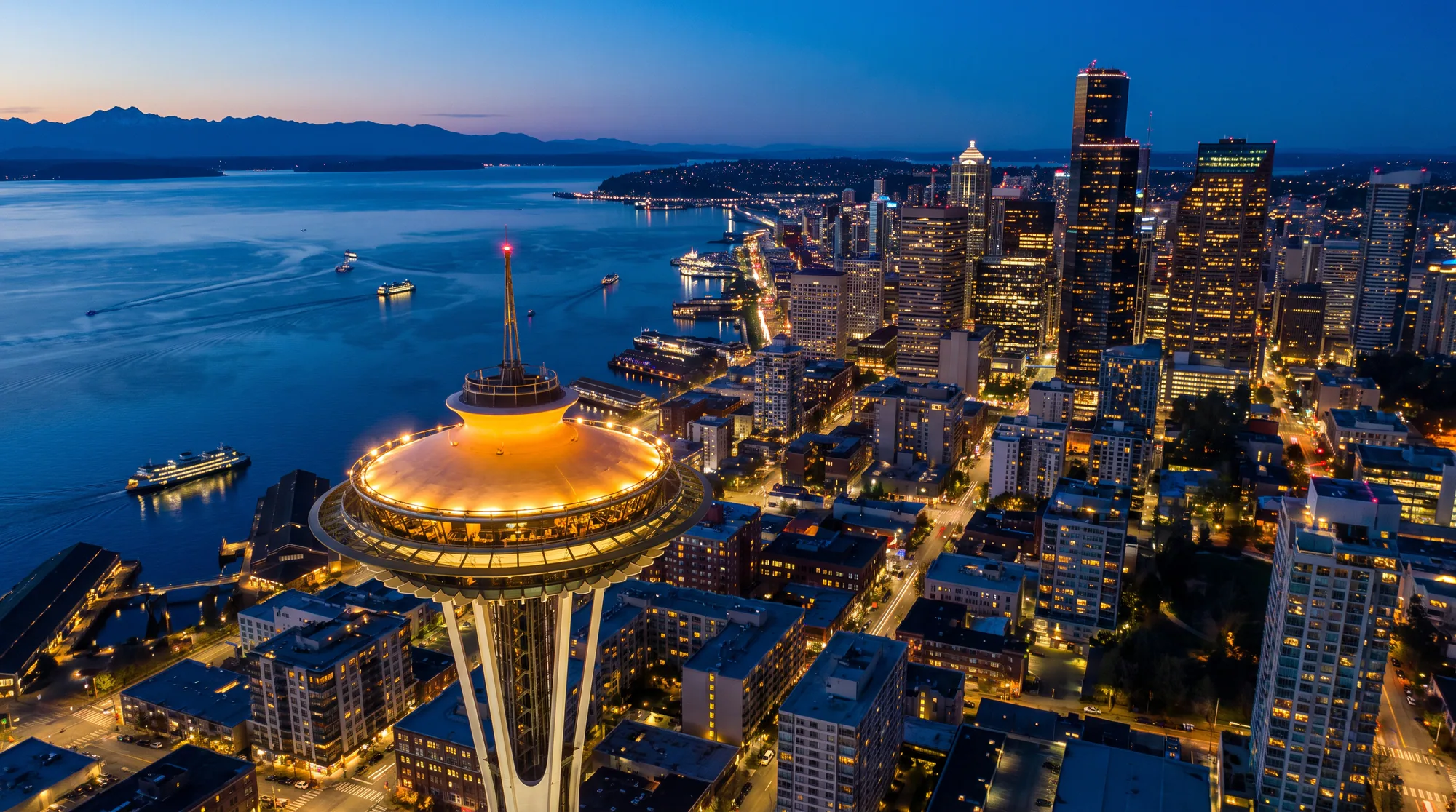
Parking Staff in Seattle
Parking Staff
in Seattle
Rate Range
$23-$33/hr
Team Size
8-40
Fill Rate
91%
Megan Hayward
Founder & CEO, TempGuru
“Capitol Hill events are artistic and indie. The crowd is younger, bohemian, creative. Your energy should feel cool, not corporate.”
Key Takeaways
Transparent Rates
No hidden fees — all-inclusive $23-$33/hr rate covers everything
Key Advantage
Crews trained on environmental and sustainability conferences-specific requirements and protocols
Key Advantage
Flexible team sizes from 8-40 — scaled to your Seattle event
Local Coverage
Fremont and Downtown Seattle area events are our strongest coverage zones
Overview
Finding qualified parking staff in Seattle has never been more competitive. Venues like T-Mobile Park and Seattle Museum of Flight host events where amateur staffing isn't an option. It's a market that rewards preparation and punishes improvisation.
Washington has its own regulatory framework that affects how parking staff work. All event staff need background checks. Smart event planners build this into their timelines. Seattle's event culture is tech-forward, environmentally conscious, and progressive. Staff should be informed about sustainability, comfortable discussing tech, and project authenticity. Casual-but-competent is the Seattle standard. That's not something you can train in an hour — it takes local crews.
Hiring parking staff for Seattle events means thinking beyond the job description. Liability management — proper documentation prevents disputes and protects venue from parking-related claims — this is what defines top-performing crews in Seattle. Transportation logistics add complexity: Sound Transit (light rail, bus, ferry) is efficient. Experienced crews plan around this — rookies don't.
Spring arrives late (April-May), 50-65°F. This doesn't just affect attendees — it directly impacts parking staff stamina and performance. Summer is beautiful and dry (75-80°F). Our Seattle deployment plans account for seasonal shifts.
Duties
Vehicle traffic direction and flow management
Direct incoming vehicles to available spots, optimize lot utilization, prevent gridlock, manage traffic during surge per
Parking credential verification and validation
Verify parking passes, validate permit types (general, VIP, ADA), issue gate passes, manage credential inventory, preven
ADA accessibility compliance
Reserve and monitor ADA-accessible spots, verify accessible parking eligibility, ensure unobstructed access routes, main
Lot safety and security monitoring
Monitor for suspicious activity, report security concerns to command center, patrol lot perimeter, maintain clear emerge
Guest service and information
Provide directions to vehicle, answer parking questions, assist guests with mobility issues, communicate wait times, han
Lot maintenance and conditions
Report hazards (potholes, debris), maintain clear line markings, monitor lot lighting, coordinate with maintenance for r
Seattle-specific protocol
Navigate Fremont neighborhood logistics and local vendor relationships
Local coordination
Coordinate with T-Mobile Park venue operations and follow their specific protocols
Seattle Parking Staff Rates (2026)
Our Seattle parking staff rates range from $23-$33/hr depending on experience, certifications, and event demands.
Standard events near Downtown Seattle and Fremont: $23-$25/hour. High-profile events at T-Mobile Park: $26-$33/hour.
Seasonal adjustments: Summer is beautiful and dry (75-80°F). Peak-season premiums of $2-4/hour apply during Seattle's busiest months.
Washington overtime rules apply at 1.5x base after 8 hours/day. We build this into event cost projections upfront.
Food handlers require Washington certification within 30 days. All compliance costs are baked into our rates — what you see is what you pay.
How to Hire
Tell Us What You Need
Describe your event — tech summit (Amazon/Microsoft), indie festival (Capitol Hill), coffee industry conference, or sports game? Seattle events span tech, arts, culture, and sustainability. Tell us the vibe.
We Build Your Crew
We match you with Seattle-based professionals who understand tech culture, indie arts scenes, or coffee industry passion. For major tech summits, we pull experienced software and venture capital event crews.
Your Team Shows Up Ready
Your team arrives via Sound Transit, early and prepared. We brief on venue logistics and attendee demographics. For tech events, we manage confidentiality protocols. Our Seattle coordinator is present throughout.
Why Seattle Events Need Professional Parking Staff
The gap between amateur and professional parking staff shows up fastest in Seattle's high-profile events. Indie film festivals and music venues at T-Mobile Park leave zero room for crew who are still figuring things out. 8M visitors and generating $3.
TempGuru's Seattle model prioritizes venue experience over general availability. We'd rather deploy a smaller team of Seattle Museum of Flight-experienced parking staff than a larger team of unknowns. That focus on quality is why event planners across Fremont and Downtown Seattle keep coming back.
Seattle Parking Staff Market Intelligence
Inside Seattle's Parking Staff Scene
Seattle's event industry employs thousands of parking staff across indie film festivals and music venues, environmental and sustainability conferences, and everything in between. 8M visitors and generating $3. The Fremont and Downtown Seattle corridors see the heaviest activity, with T-Mobile Park anchoring the large-format end of the market.
What's changing: event planners increasingly prefer staffing partners over direct hires for parking staff roles. Food handlers require Washington certification within 30 days. The administrative burden of Washington compliance, payroll taxes, and workers' comp makes agency staffing the more practical choice for most Seattle events.
Parking Staff in Seattle: The Full Picture
Seattle parking management operates at Climate Pledge Arena and secondary venues within Pacific Northwest market emphasizing public transit and sustainability. The facility's net-zero operational commitment shapes parking operations—sustainability focus determines strategy. Success requires promoting transit alternatives, managing limited facility capacity aligned with sustainability principles, respecting regional environmental consciousness, and accepting that Seattle intentionally constrains parking access.
Climate Pledge Arena's Seattle Center location emphasizes public transit utilization. The facility integrates with surrounding Seattle Center (museums, conventions, public space) where parking remains constrained intentionally. Monorail, light rail, bus systems all provide transit options exceeding regional average. Our parking guidance actively promotes transit alternatives—detailed transit information, route planning, schedule coordination all provided. Customers choosing personal vehicles accept limited parking availability and premium pricing reflecting sustainability policy.
A realistic scenario: Friday evening Kraken game means 15,000-17,000 attendees where 70% utilize public transit (light rail primary), 15% utilize rideshare, 10% utilize personal vehicles, and 5% bike/walk. Our parking guidance emphasizes light rail accessibility—stations within walking distance reducing vehicle dependence. Customers choosing parking understand they're accepting limited availability and premium rates ($12-18) reflecting sustainability constraints. Facility parking accommodates customer vehicles while primary transportation focus remains transit.
Seattle's environmental culture shapes parking operations meaningfully. Customers appreciate transparency about sustainability priorities—explaining limited parking availability reflects intentional policy rather than scarcity or operational limitation. This values-alignment generates customer acceptance of premium pricing and limited capacity.
Electric vehicle charging infrastructure remains prominent—Climate Pledge Arena maintains robust EV charging supporting Tesla and other EV owners. We actively promote sustainable transportation options including EV parking and transit utilization.
Pacific Northwest weather affects parking operations. October-April precipitation (50+ inches annually) creates lot drainage considerations. Wet-weather parking operations require attention to surface conditions, drainage management, and customer safety during precipitation. We've implemented precipitation-responsive lot management ensuring accessibility during heavy rain.
Bicycle parking infrastructure gains importance reflecting Seattle's bike culture. Secure bicycle parking areas at arena support customers choosing sustainable transportation. This infrastructure differentiates Seattle operations from car-centric markets.
Successfully managing Seattle parking operations requires embracing sustainability culture defining regional values, actively promoting transit and sustainable transportation alternatives, respecting intentionally-constrained capacity, supporting EV and bicycle infrastructure, and accepting that anti-car policy represents values-driven strategy rather than operational burden.
Seattle's ferry terminal coordination and waterfront event access create specialized parking requiring maritime transportation integration and water-centric venue knowledge. Events accommodating ferry-arriving attendees demand parking coordination with ferry schedules, clear wayfinding from ferry terminals to parking facilities, and perhaps shuttle services bridging ferry access to remote parking. Parking professionals must understand ferry operations and integrate parking with maritime transportation systems.
Waterfront event parking in Seattle creates unique challenges—many major venues sit on waterfront property with limited adjacent parking. Remote lots connected via shuttle services become necessary; parking professionals coordinate shuttle timing, manage lot-to-venue flow, and communicate wait times helping attendees plan transitions. This transforms parking from simple lot access into coordinated transportation system.
Rain preparedness shapes Seattle parking operations throughout the year consistently. Paved surfaces become slippery in rain; vehicle access may be complicated by standing water; attendee safety requires attention to wet conditions. Parking professionals communicate clearly about rain conditions, recommend appropriate footwear, and perhaps position staff strategically addressing weather-related challenges. Weather awareness becomes operational standard.
Multimodal transportation in Seattle emphasizes transit and bike access alongside driving. Parking operations coordinate with public transit information, support bike parking infrastructure, and encourage transit use as primary transportation mode. This multimodal approach reflects Seattle transportation values and positions parking as part of broader mobility system.
Ferry terminal parking management includes understanding peak arrival/departure times, coordinating with ferry schedules, and directing attendees efficiently. Parking professionals should understand ferry operations basics and communicate schedule information. Some attendees may be parking vehicles long-term while using ferries; others may be short-term parking for quick access.
Waterfront environmental sensitivity requires parking operations respecting ecological constraints. Environmental protection regulations, native habitat protection, and stormwater management all impact parking operations. Parking professionals should understand environmental requirements and ensure operations comply fully. Leave-no-trace principles guide operations in sensitive areas.
Seattle parking professionals develop expertise in maritime transportation coordination and waterfront operations. These skills transfer to other coastal cities with significant maritime activity. Career opportunities exist within port authorities, shipping companies, and waterfront development organizations. Seattle experience becomes valued credential supporting advancement into maritime operations management.
Community environmental stewardship becomes expected standard in Seattle parking operations. Attendee communication about environmental impact of driving encourages transit and bike use. Native plant landscaping in parking areas demonstrates environmental commitment. Stormwater management protocols protect local waterways. Bird-friendly design in parking facilities respects local wildlife. Environmental education components in wayfinding communicate ecological values. Seattle community expects environmental consideration throughout event operations including parking.
Environmental monitoring in Seattle parking operations should track operational environmental impact. Carbon footprint analysis for parking operations guides sustainability improvements. Native species habitat protection in parking area landscaping contributes positively to ecosystem health. Stormwater quality monitoring ensures compliance with environmental regulations. Community reporting of environmental commitments builds public trust. Transparent environmental stewardship demonstrates genuine commitment transcending simple greenwashing.
Ferry schedule integration in Seattle parking operations requires ongoing coordination with maritime operations. Real-time ferry arrival/departure information should be communicated to parking attendees planning departures. Seasonal ferry schedule changes may affect parking operations. Coordination protocols should address how parking operations respond to ferry delays or changes. Staff training should include basic ferry operation knowledge. Seamless maritime-parking coordination creates positive attendee experience for ferry-using attendees.
Related Resources
Frequently Asked Questions
What happens to vehicles remaining after event close?
expand_moreHow do you track parking performance metrics?
expand_moreDo you manage permit and compliance documentation?
expand_moreDo your parking staff know Seattle's transit and parking logistics?
expand_moreWhat's the typical lead time for parking staff in Seattle?
expand_moreGet Parking Staff for Seattle — Fast
Same-week deployment of qualified parking staff. $23-$33/hr, Washington-compliant, venue-experienced.