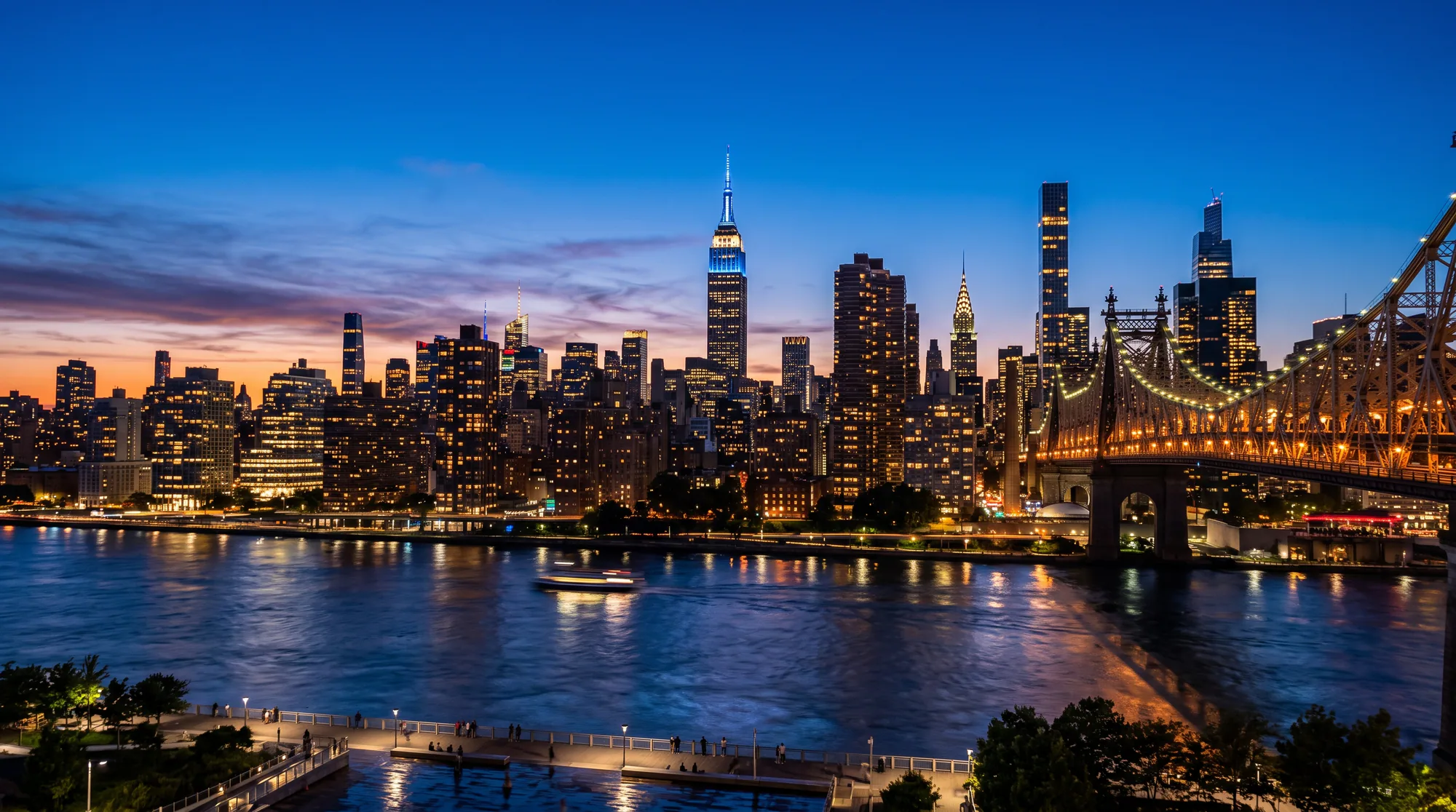
Parking Staff in New York City

Parking Staff
in New York City

Rate Range

$23-$33/hr

Team Size

8-40

Fill Rate

91%

Megan Hayward

Megan Hayward

Founder & CEO, TempGuru

“Fashion Week is insane. Fittings, shows, after-parties — events run simultaneously across the city. Experienced fashion crews only.”

format_quote

Key Takeaways

bolt

Vetted Talent

Background-checked, drug-tested, and New York-certified parking staff

verified_user

Transparent Rates

No hidden fees — all-inclusive $23-$33/hr rate covers everything

payments

Transparent Rates

Seasonal rate adjustments transparent and communicated upfront

analytics

Key Advantage

Teams familiar with financial services and investment symposiums and New York City event culture

Overview

Finding qualified parking staff in New York City has never been more competitive. Venues like Barclays Center and Cipriani Wall Street host events where amateur staffing isn't an option. This is a market where parking staff quality directly impacts client retention and venue reputation.

From a regulatory standpoint, New York City events require New York-specific compliance. All event staff need background checks. Smart event planners build this into their timelines. NYC's event culture is fast-paced, critical, and sophisticated. Staff should be polished, quick-witted, and unflappable. Attendees are demanding, well-traveled, and notice details. Excellence is expected, not celebrated. That's not something you can train in an hour — it takes local crews.

Event staffing in New York City requires understanding the complete picture. At venues like Barclays Center, first and last impression management — parking experience sets tone for event visit and influences return attendance is the difference between success and scrambling. NYC subway and bus system is extensive but often delayed. TempGuru builds these variables into every New York City deployment plan.

Ask any experienced parking staff about working New York City events and weather comes up immediately. Spring arrives late (April-May), 50-65°F. We factor these conditions into crew sizing, shift length, and equipment planning.

Duties

01

Parking credential verification and validation

Verify parking passes, validate permit types (general, VIP, ADA), issue gate passes, manage credential inventory, preven

02

ADA accessibility compliance

Reserve and monitor ADA-accessible spots, verify accessible parking eligibility, ensure unobstructed access routes, main

03

Lot safety and security monitoring

Monitor for suspicious activity, report security concerns to command center, patrol lot perimeter, maintain clear emerge

04

Payment processing and citation management

Process paid parking, issue citations for violations, document parking violations with photos, provide violation appeals

05

Lot maintenance and conditions

Report hazards (potholes, debris), maintain clear line markings, monitor lot lighting, coordinate with maintenance for r

06

Exit management and vehicle departure

Manage exit lot flow during event close, clear disabled vehicles blocking access, coordinate with tow services for viola

07

New York City-specific protocol

Coordinate with Midtown Manhattan area vendors and service providers

08

Local coordination

Manage New York-specific compliance documentation and crew certifications

New York City Parking Staff Rates (2026)

Entry-Level: $23/hour — Parking staff with foundational training, suitable for standard New York City events near Brooklyn.

Mid-Level: $26/hour — Staff with New York City venue experience and proven reliability across museum exhibitions and art world galas.

Senior/Lead: $33/hour — Team leads managing crews of 40+ at high-profile New York City events.

Rush Booking: +15% surcharge for under-48-hour requests. Even on rush orders in New York City, we maintain a 91% fill rate.

Food handlers require NYC certification within 30 days. Contact us for custom quotes on multi-event packages across the New York City metro area.

How to Hire

1

Tell Us What You Need

Tell us your venue and event type — Fashion Week (frenetic), corporate financial conference (polished), museum gala (sophisticated), or Broadway event (theatrical)? Each demands different crew profiles.

2

We Build Your Crew

We match you with NYC-based professionals who understand Manhattan sophistication and Brooklyn cool. For Fashion Week, we pull top-tier runway and backstage crews. For galas, we source luxury-service specialists.

3

Your Team Shows Up Ready

Your team arrives via subway, on time (early arrival built into the brief). We do a thorough pre-event walkthrough because NYC venues are complex. Our NYC coordinator is embedded throughout because logistics move fast.

Why New York City Event Planners Choose TempGuru for Parking Staff

We've staffed parking staff across New York City's most demanding venues — from Barclays Center to events in Brooklyn. 2M visitors and generating $12. That volume requires staffing partners who know the local market cold.

Our New York City parking staff network is built on reliability. We vet for Barclays Center venue experience, New York compliance, and role-specific skills. When you work with TempGuru in New York City, you get crews who know the city, not just the job description.

“Fashion Week is insane. Fittings, shows, after-parties — events run simultaneously across the city. Experienced fashion crews only.” — Megan Hayward, Founder & CEO, TempGuru

New York City Parking Staff Market Intelligence

The New York City Parking Staff Market in 2026

2M visitors and generating $12. 4B in economic impact. For parking staff, this translates to consistent demand and competitive pay — but also higher expectations. Event planners working Barclays Center and Brooklyn area events increasingly require demonstrated venue experience, not just availability.

The shift toward professionalized event staffing means parking staff in New York City need verifiable credentials, New York compliance, and references. Spring arrives late (April-May), 50-65°F. These operational realities shape deployment planning across the New York City metro, from financial services and investment symposiums to tech conferences and startup pitches.

Parking Staff in New York City: The Full Picture

New York City parking management represents the network's most complex environment. Madison Square Garden's Manhattan location, Barclays Center in Brooklyn, and historic theaters throughout the city create multi-borough parking challenges exceeding all other markets. Limited parking capacity, aggressive enforcement, permit systems, and premium pricing create operational environment where parking becomes strategic challenge. Success requires understanding NYC parking infrastructure, managing multi-borough complexity, respecting permit systems, and accepting that parking here proves intentionally difficult.

Madison Square Garden's Midtown Manhattan location means virtually no facility parking. Customers depend entirely on commercial parking infrastructure—highly-limited supply commanding premium pricing ($25-50+). The MSG box office actively discourages personal vehicle attendance, promoting mass transit alternatives. Our operations acknowledge this reality—parking guidance emphasizes transit options (subway stations surrounding arena) rather than promoting personal vehicles. Customers choosing parking understand they're accepting premium costs reflecting Manhattan's intentional anti-car policies.

A realistic scenario: Saturday concert at Madison Square Garden means 18,000-20,000 attendees where 70% utilize public transit, 20% utilize rideshare, and perhaps 10% park personal vehicles. Our parking guidance directs vehicle-parking customers toward commercial facilities with available capacity—limited options at premium pricing. We've negotiated relationships with specific parking operators ensuring capacity availability even during sold-out events. However, we honestly communicate that MSG parking proves expensive and recommend transit alternatives whenever appropriate.

Barclays Center in Brooklyn offers facility parking (2,500+ spaces) exceeding MSG capacity but facing different challenges. Brooklyn parking permits restrict non-resident event parking in residential neighborhoods surrounding arena. Understanding which facilities remain available to event parking versus permit-restricted zones proves critical. We've negotiated agreements with specific Brooklyn facilities ensuring customer guidance directs to appropriate lots.

NYC's permit system complexity exceeds all other markets. Residential neighborhoods maintain strict permit protocols. Some neighborhoods restrict parking to permit holders entirely. Commercial facilities operate under different rules. Our team maintains detailed permit-zone knowledge preventing customer guidance into restricted zones.

Parking enforcement operates with legendary aggressiveness—NYPD and private enforcement contractors monitor violations continuously. Towing happens swiftly. Meter compliance remains strict during business hours. Our customer guidance emphasizes enforcement realities preventing expensive citations.

Historic theaters throughout NYC face parking constraints similar to MSG—limited supply, premium pricing, mass transit dependence. Radio City, Beacon Theatre, and others all lack substantial facility parking—customers depend on surrounding infrastructure.

Successfully managing NYC parking operations requires accepting intentional anti-car policies, managing multi-borough complexity, respecting permit systems with precision, understanding enforcement realities, promoting transit alternatives alongside parking options, and accepting premium pricing as NYC parking reality.

New York City's zero-lot event paradigm and subway/rideshare coordination model fundamentally transform parking from vehicle storage into multimodal transportation facilitation completely. Many NYC events feature no parking whatsoever—all attendees arrive via subway, taxi, ride-share, or walking consistently. Parking professionals in this context become mobility coordinators helping attendees navigate transit options, understand subway routes, and arrange ride-share efficiently. This transforms traditional parking into transit information and guidance services fundamentally.

When parking exists in NYC, access proves extremely limited—expensive garages remote from venues serve few events realistically. Parking professionals must clearly communicate about parking scarcity, help attendees understand costs substantially, and often encourage transit alternatives over driving diplomatically. This requires diplomatic skill—helping attendees accept non-traditional transportation approaches. Managing expectations through clear communication prevents frustration and supports positive event experience.

Ride-share management becomes central NYC transportation coordination. Uber and Lyft generate enormous demand during peak event times, creating bottleneck challenges at ride-share pickup locations specifically. Parking professionals coordinate with venue management, establish clear ride-share zones, manage traffic during pickup peak periods, and educate attendees about wait times. This multimodal coordination requires sophisticated understanding of transportation systems and attendee flow.

Taxi coordination historically dominated NYC transportation but now shares space with ride-share. Parking professionals manage taxi stands, coordinate with commercial taxi services, and integrate taxis with ride-share services. This creates complex transportation orchestration requiring traffic management skills and genuine understanding of NYC's evolving transportation landscape.

Subway accessibility becomes parking professional responsibility in transit-first NYC events. Attendees need clear guidance about nearest subway stations, line options, and fare payment. Parking professionals should understand subway system basics, communicate effectively, and provide accurate transit information. Subway overcrowding during events may require guidance about alternative routes or times.

Walking routes become transportation alternative. Parking professionals should identify walkable routes between parking locations and venues, communicate distances honestly, and perhaps provide walking directions. Some attendees prefer walking; others need realistic estimates about walking time and difficulty.

NYC parking/mobility professionals develop expertise in transit-centric operations and multimodal coordination. These skills become increasingly valuable as cities across America embrace transit-first transportation strategies. Career opportunities exist within transit agencies, urban planning consultancies, and major corporations managing metropolitan transportation operations. NYC transportation expertise supports advancement into urban mobility management roles.

Transit agency partnerships become central to NYC parking operations in zero-parking contexts. Coordination with MTA enables real-time transit information at event venues, staffed information booths, and dedicated transit service if event demand justifies. Partnership development with transit authorities ensures smooth operations. Pre-event coordination with transit agencies enables special service planning. Transit agency investment in event support reflects mutual interest in attendee success. These partnerships become increasingly important as transit becomes primary transportation.

Budget management for NYC parking operations must account for expensive real estate and premium labor costs. Parking services cost substantially more than suburban operations, reflecting market conditions. Cost-effective operations require sophisticated systems maximizing efficiency and minimizing waste. Technology investment often provides better ROI than additional staffing. Detailed expense tracking enables identifying cost reduction opportunities without compromising service quality. Financial discipline becomes operational necessity in expensive urban markets.

Related Resources

Frequently Asked Questions

Can parking staff handle multi-lot operations?

expand_more

What happens to vehicles remaining after event close?

expand_more

How do you track parking performance metrics?

expand_more

How do you handle last-minute parking staff changes in New York City?

expand_more

What's the typical lead time for parking staff in New York City?

expand_more

Get Parking Staff for New York City — Fast

Same-week deployment of qualified parking staff. $23-$33/hr, New York-compliant, venue-experienced.

Previous
Previous

Guest Services in Nashville

Next
Next

Gate Staff in Atlanta